

Fishing, Boating, Swimming in Biltmore Lake, NC
Biltmore Lake, Outdoor Activities, Fishing, Boating, Swimming, Regulations
Can You Fish, Boat, and Swim in Biltmore Lake, NC?
Biltmore Lake, just outside Asheville, North Carolina, is a picture‑perfect mountain community built around a 62‑acre private lake. If you’re considering moving there, visiting friends, or simply curious about what you can actually do on the water, it’s natural to ask: can you fish, boat, and swim in Biltmore Lake—and what rules do you need to follow?
First Things First: Biltmore Lake Is Private
One of the most important points to understand is that Biltmore Lake is not a public lake. It is owned and managed by the Biltmore Lake Homeowners Association (HOA) for the benefit of residents and their invited guests. Roads, common areas, and the lake itself are all privately maintained, and community rules govern how the water can be used (as reflected in HOA documents and local commentary on access restrictions[1]).
In practice, this means:
The general public cannot simply show up and use the lake or beach.
Access to fishing, boating, and swimming amenities is restricted to homeowners, residents, and their registered guests.
📌 Key Takeaway: If you are not a resident or an invited guest, you cannot legally use Biltmore Lake for recreation.
Fishing at Biltmore Lake: Catch‑and‑Release Only
For many residents, fishing is one of the most relaxing ways to enjoy the lake. The community has allowed fishing for years, but with a very specific rule: it is catch‑and‑release only. The Biltmore Lake governing documents make it clear that no fish may be harvested from the lake[2]. This protects the fish population and helps keep the ecosystem in balance for everyone’s enjoyment.
Who Can Fish—and Where?
Only residents and their guests, following HOA rules, are allowed to fish on Biltmore Lake. Fishing is typically done from the shoreline in designated areas or from approved non‑motorized boats such as canoes or kayaks. Because this is a residential community, anglers are also expected to respect private property lines and avoid disturbing lakeside homes, docks, or yards.
State Fishing Regulations Still Apply
Even though Biltmore Lake is private, it is still considered inland freshwater for regulatory purposes. That means North Carolina’s inland fishing regulations, overseen by the North Carolina Wildlife Resources Commission (NCWRC), apply here just as they would on a public lake[3]. The 2025–2026 Inland Fishing, Hunting & Trapping Regulations Digest sets out statewide rules on licenses, methods, and creel limits.
Anglers must hold a valid North Carolina freshwater fishing license, even when fishing on private water like Biltmore Lake, unless they qualify for a specific exemption.
If the lake is ever designated as a particular type of trout water (such as hatchery‑supported or catch‑and‑release only), those additional rules would also apply. Residents can verify this via NCWRC’s online maps or the current regulations digest[4].
💡 Pro Tip: Treat Biltmore Lake like any other regulated waterway—carry your license, follow state gear and species rules, and then add the HOA’s catch‑and‑release requirement on top.
Boating on Biltmore Lake: Peaceful and Non‑Motorized
If you picture quiet mornings paddling across glassy water with mountain views, Biltmore Lake delivers exactly that. The community amenities include a boathouse, dock, and sandy beach, along with a fleet of non‑motorized craft—cedar‑strip canoes, kayaks, paddleboats, and small sailboats such as Sunfish—available for resident use[5].
Allowed Watercraft and Usage Rules
Biltmore Lake is intentionally managed as a non‑motorized lake for recreational purposes. The emphasis is on quiet, low‑impact boating that fits with the residential character of the neighborhood. Based on community descriptions and HOA charter provisions[5][6], you can expect the following general guidelines:
Permitted boats: Canoes, kayaks, paddleboats, stand‑up paddleboards, and small sailboats.
Not permitted for recreation: Gas‑powered boats and personal watercraft (jet skis). Any motorized activity is generally limited to maintenance or emergency use, if allowed at all.
Noise and wake: Because only non‑motorized craft are allowed, wakes are small and the lake remains calm for paddlers and swimmers alike.
Boat Storage and HOA Restrictions
While you can enjoy boating on the lake, you can’t simply park your canoe or trailer in front of your house. The Biltmore Lake Charter and related rules restrict the parking and storage of watercraft on public or private streets and common areas. Boats and other watercraft may not be stored outside enclosed garages unless expressly authorized by the HOA Board[6]. This helps preserve the community’s clean, uncluttered look and ensures roads remain safe and passable.
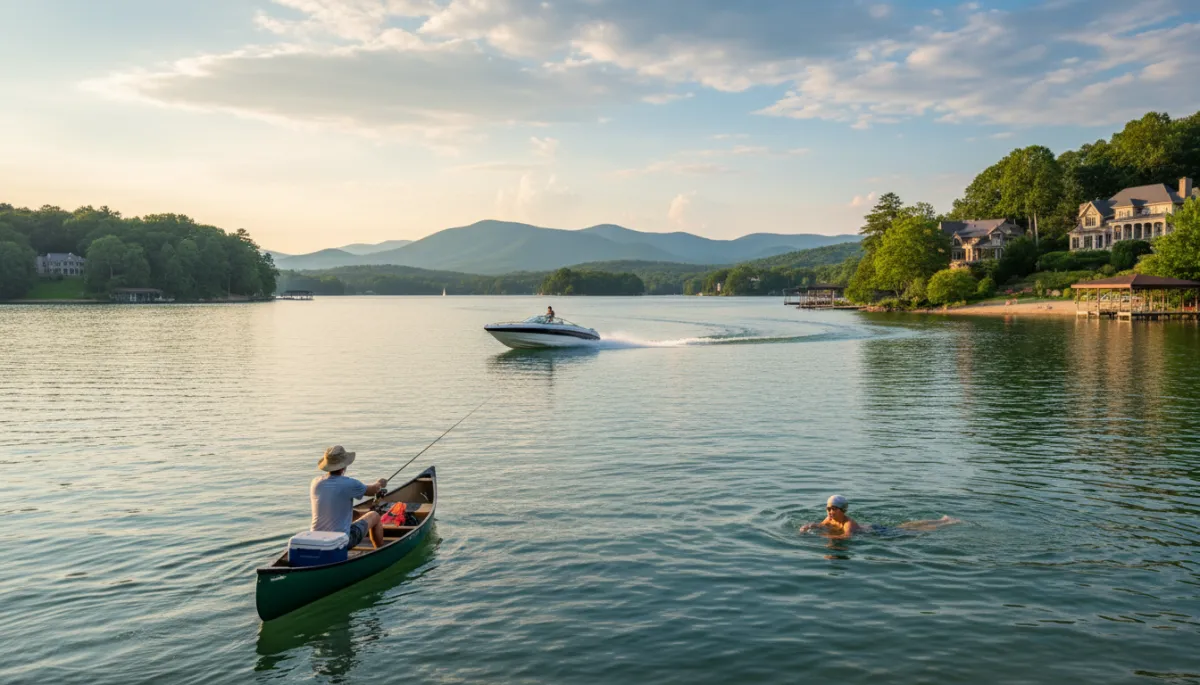
Non‑motorized boating keeps Biltmore Lake peaceful for paddlers, anglers, and lakeside homeowners.
Safety Expectations on the Water
Because the lake is non‑motorized for recreation, many of North Carolina’s state boating rules—such as operator education for boats with 10‑horsepower motors or more—rarely come into play[7]. Still, common‑sense safety remains essential:
Wear a properly fitted personal flotation device (PFD), especially for children or inexperienced swimmers.
Keep an eye out for swimmers in designated swim zones and give them a wide berth.
Follow any posted HOA rules about boating hours, check‑out procedures at the boathouse, and guest use.
Swimming in Biltmore Lake: Beautiful, but Check Water Quality
Biltmore Lake features a private swim beach behind the community clubhouse, complete with a sandy shoreline, a swim dock, and buoys that mark off the designated swimming area. Historically, the lake’s main swim season has run from around Memorial Day into September, with weekly water quality sampling during the warmer months[8].
Current Water Quality Status (2026)
As of late June 2026, the most recent publicly reported test on June 24, 2026 showed that Biltmore Lake’s private beach failed to meet recreational water quality standards for primary contact activities like swimming and snorkeling, due to elevated E. coli levels above the guideline of 126 MPN per 100 mL[9]. Results were posted on June 29, 2026, and serve as a clear warning that swimming is not advisable when such readings are in effect.
⚠️ Warning: Always check the most recent E. coli test results or HOA advisories before swimming. Conditions can change from week to week during the season.
Swim Area Rules and Access
Like other lake activities, swimming at Biltmore Lake is reserved for residents and their guests only[5][9]. The HOA typically sets specific hours and seasonal dates for lifeguard coverage (if provided), gate access, and use of docks or floating platforms. While full, up‑to‑date rules are not publicly posted, past design documents and community guidelines highlight a few themes:
Swim only within the designated buoyed swim zone, which separates swimmers from boat traffic.
Follow posted rules regarding children, supervision, and flotation toys. Young children should never be left unattended near the water.
Respect quiet hours and avoid loud music or disruptive behavior on the beach and dock areas.
Private Pools and Backyard Water Fun
For residents who want more predictable water conditions, Biltmore Lake’s design guidelines allow in‑ground pools and spas in rear or side yards, subject to HOA approval. Above‑ground pools are not allowed, and any pool must be enclosed with fencing at least 48 inches high (or higher if required by code), with pool equipment screened for aesthetics[10]. These rules mirror the community’s broader emphasis on safety, visual harmony, and compliance with local building standards.
Putting It All Together: Biltmore Lake Activities and Regulations
If you’re drawn to Biltmore Lake for its lifestyle, the good news is that residents enjoy a rich mix of lake‑centered activities—so long as they stay within clearly defined rules. Here’s a quick overview of what’s allowed and how it’s regulated:
Fishing: Yes, for residents and guests. Strictly catch‑and‑release, with a valid NC freshwater fishing license and adherence to statewide regulations.
Boating: Yes, but non‑motorized only—canoes, kayaks, paddleboats, paddleboards, and small sailboats. Boat storage is tightly controlled by the HOA, and public launching is not allowed.
Swimming: Yes, at the private community beach and swim area, but only for residents and guests—and only when water quality tests show E. coli levels within safe limits.
For anyone considering a home in Biltmore Lake, these regulations are actually part of the appeal. They keep the lake uncrowded, protect the shoreline, and preserve a calm, family‑friendly atmosphere. The trade‑off is that you must be willing to follow HOA rules closely and stay current on seasonal updates—especially around swimming advisories and any changes in watercraft policies.
💡 Final Tip: Before planning a day of fishing, boating, or swimming, check the Biltmore Lake HOA website or contact the community office for the latest rules, water quality results, and guest procedures. Regulations can evolve, and the HOA is your most reliable, up‑to‑date source.
With the right expectations and a bit of preparation, Biltmore Lake offers a serene, well‑managed setting to enjoy the water—rod in hand, paddle in the water, or toes in the sand.
Sources: [1] Reddit discussion on Biltmore Lake/Enka Lake HOA and private access; [2] Biltmore Lake community Rules & Regulations (catch‑and‑release policy); [3][4] North Carolina Wildlife Resources Commission – 2025–2026 Inland Fishing, Hunting & Trapping Regulations Digest; [5] Biltmore Lake community recreation descriptions (boathouse, non‑motorized fleet); [6] Biltmore Lake Charter/CRs via Looking Glass Realty (watercraft storage restrictions); [7] NCWRC boating regulations; [8] NC DEQ design documents regarding swim season and facilities; [9] Swim Guide – Biltmore Lake recreational water quality tests (June 2026); [10] Buncombe County MOU and Biltmore Lake design guidelines on pools and fencing.