Cost of Living: Biltmore Lake vs Asheville, NC
Relocation, Cost of Living
What Is the Cost of Living in Biltmore Lake, NC Compared to Asheville?
Thinking about trading the buzz of Asheville for the calm of Biltmore Lake, or vice versa? Understanding how the cost of living compares between these two Western North Carolina communities is essential before you make a move or set a housing budget.
Big Picture: How Biltmore Lake and Asheville Compare on Cost
Asheville is already known as one of North Carolina’s pricier cities. Several sources place its overall cost of living between about 10–21% above the U.S. average, largely because of housing demand and lifestyle amenities (HendersonCountyHomes.com; CostOfLivingData.com). By contrast, North Carolina as a whole sits roughly 4–6% below the national average, with a statewide cost-of-living index around 94–96 (NC Pay Calculator; LifeCalc; CalcFi).
Biltmore Lake, a master-planned community just west of Asheville in Buncombe County, does not have its own published cost-of-living index. However, when you look at actual home prices and rents, it quickly becomes clear that Biltmore Lake generally costs more to live in than Asheville overall, especially for homeowners and anyone seeking a larger single-family home.
Housing: The Biggest Difference Between Biltmore Lake and Asheville
Housing is the single largest driver of cost-of-living differences between these two areas. While day-to-day expenses such as groceries, utilities, and healthcare are similar, the price of where you live can vary dramatically.
Asheville Housing Snapshot (2026)
In Asheville city limits, the median home value is about $411,000, roughly 35% higher than the U.S. median of around $305,000 (CostOfLivingData.com). Median rent runs near $1,300 per month, which is very close to the national median rent of about $1,314. This means Asheville is especially expensive if you plan to buy, but renters can still find options that align with national averages, depending on neighborhood and size.
Biltmore Lake Housing Snapshot (2026)
Biltmore Lake is a gated, amenity-rich community built around a 62-acre lake, with trails, parks, and a strong HOA. That lifestyle comes with a premium. Recent market data shows:
Median sold price around $925,000, with homes ranging roughly from $399,000 up to over $2.1 million (Luxury-Communities.com).
Active listings for typical three- and four-bedroom homes commonly fall between $825,000 and $1 million (BiltmoreForest.com; Realtor.com).
A representative 4-bedroom home has a rent estimate of about $3,290 per month (Zillow, 41 Lake Dr).
In other words, while Asheville’s median home value hovers just above $400,000, a move into Biltmore Lake often means paying roughly double that—especially if you are shopping in the core of the community for a move-in-ready single-family home. Even though some broader data sources list an “average” home value near $202,400 for the wider Biltmore Lake area (Places.us.com), the homes actually on the market inside the master-planned community skew much higher, often in the $800,000 to $1 million range or more.
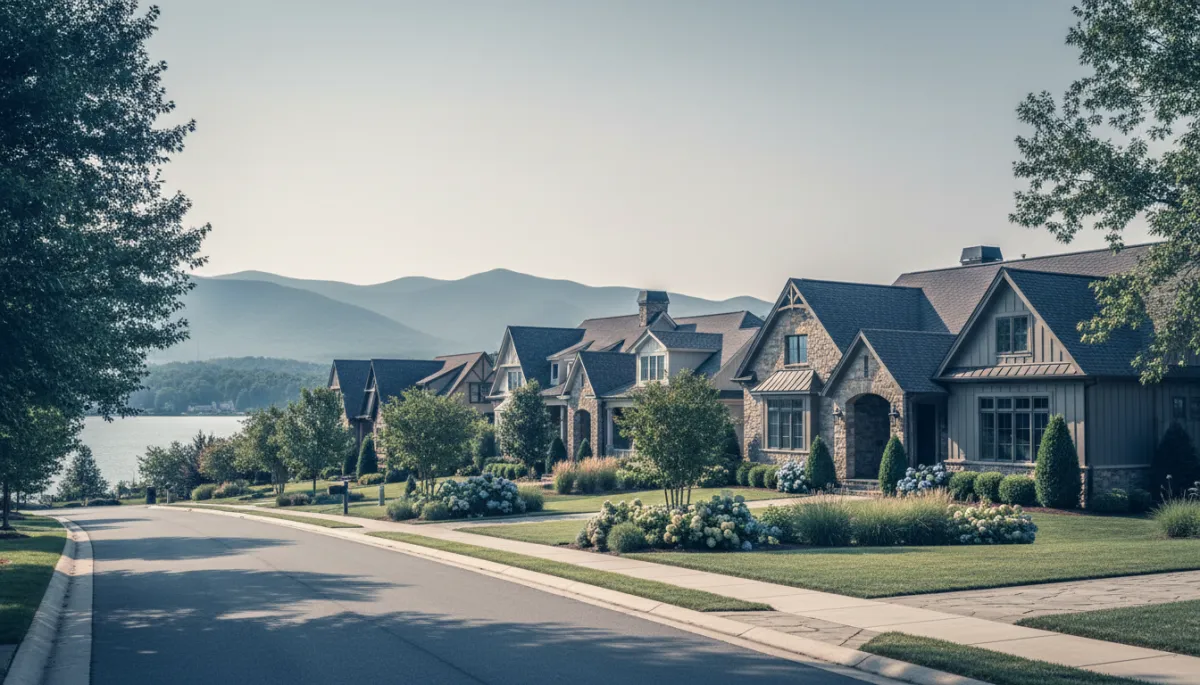
Biltmore Lake’s resort-style setting commands a housing premium over Asheville’s citywide median.
Monthly Cost of Living: Biltmore Lake vs. Asheville
Biltmore Lake: Estimated Monthly Budget
Based on recent housing and regional cost data, here’s a realistic estimate of what it costs to live in Biltmore Lake in 2026.
Single individual in a typical Biltmore Lake home:
• Housing (rent equivalent or mortgage): approximately $3,000–$3,500/month (Zillow estimates).
• HOA dues: about $200/month (around $2,400 per year) (PrivateMountainCommunities.com).
• Other living costs (groceries, utilities, transportation, healthcare, local taxes): about $1,000–$1,200/month, assuming Asheville-area price levels.
• Estimated total: roughly $4,200–$4,900 per month, or about $50,000–$59,000 per year.Family of four in a larger Biltmore Lake home:
• Housing: often $4,000+/month, depending on purchase price and mortgage terms.
• HOA: still about $200/month.
• Additional living costs (larger grocery bills, utilities, commuting, healthcare, activities): around $2,000–$2,500/month.
• Estimated total: about $6,200–$7,700 per month, or approximately $75,000–$92,000 per year.
These figures place Biltmore Lake firmly in a high-cost tier for North Carolina, driven almost entirely by housing and HOA-related expenses. Everyday costs feel similar to Asheville, but the roof over your head is significantly more expensive.
Asheville: Estimated Monthly Budget
For Asheville itself, several sources provide monthly budget estimates based on a moderate lifestyle:
Salary.com estimates around $2,280/month for a single person and about $5,043/month for a family of four (Salary.com).
Another breakdown suggests a moderate lifestyle at roughly $3,450/month for one person and about $5,348/month for a more comfortable lifestyle (CostLiving.net).
Translating those numbers, a typical single person in Asheville might spend $2,200–$3,500 per month, depending on how centrally they live and how often they dine out or take advantage of the city’s vibrant arts, food, and brewery scene. A family of four will likely fall in the $5,000–$5,500 per month range for a moderate lifestyle—noticeably less than the estimated $6,200–$7,700 per month in Biltmore Lake.
Everyday Expenses: Mostly Similar Between the Two
When it comes to non-housing costs, Biltmore Lake and Asheville are closely aligned. Both sit within Buncombe County and draw from the same grocery stores, utility providers, healthcare systems, and regional tax structure. Key factors include:
Groceries & dining: Prices are similar across the metro area. Asheville’s restaurant scene might tempt you to spend more, but the baseline cost for food is comparable whether you live lakeside or downtown.
Utilities: North Carolina’s utilities generally track near the national average. Expect little difference between Biltmore Lake and Asheville, aside from home size and energy efficiency.
Transportation: Living in Biltmore Lake may mean slightly longer drives to work, school, or entertainment in Asheville, which can add fuel costs. However, the difference is usually modest unless you commute daily at peak times.
Taxes: North Carolina uses a flat income tax rate of about 4.25–4.5%, and property tax rates in Buncombe County hover around 0.7–0.82% of assessed value (LifeCalc; CalcFi). The rate is similar, but because Biltmore Lake homes are typically more expensive, the dollar amount of property taxes is higher.
Income, Affordability, and Lifestyle Trade-Offs
One interesting wrinkle is that median household income in Biltmore Lake (around $53,594) is actually a bit lower than the North Carolina average (~$57,244) and about 18% below the national median (~$65,026) (Places.us.com). Meanwhile, Asheville’s median household income is closer to $67,200 per year, giving city residents a somewhat larger average paycheck to work with.
That means the cost burden of Biltmore Lake’s higher home prices can be significant, unless residents bring in higher-than-average incomes from remote work, retirement savings, or equity from previous home sales. The community’s resort-style amenities—lake access, trails, community events, and security—are a major part of the appeal, and many residents are willing to trade a higher monthly budget for that quality of life.
So, Which Is More Affordable: Biltmore Lake or Asheville?
When you put all the pieces together, the answer is clear: Biltmore Lake is generally more expensive to live in than Asheville overall, primarily because of housing and HOA costs. If you are planning to buy a home in Biltmore Lake, you should be prepared for prices that are often two times or more the Asheville citywide median. Renters looking for larger single-family homes will also see a steep jump compared with Asheville’s median apartment or small-home rent.
On the other hand, if you are drawn to Biltmore Lake’s quieter, neighborhood-focused lifestyle—complete with lake views, walking trails, and a strong sense of community—you may decide that the premium is worth it. Asheville offers more variety in price points and property types, plus walkable neighborhoods and cultural amenities, making it easier to tailor your cost of living to your budget.
📌 Key Takeaway: For most households, Asheville provides more flexibility and lower housing costs, while Biltmore Lake delivers a higher-end, amenity-rich lifestyle at a noticeably higher monthly price.
As with any move, the right choice depends on your priorities: budget, space, access to nature, commute time, and the kind of community you want around you. But if you are comparing strictly on dollars and cents, Asheville is the more affordable option, and Biltmore Lake is the upscale alternative just a short drive away.